Beer looks simple. Water, malt, hops and yeast. But turning those four things into the pint in front of you is one of the oldest bits of food science people have, and every step changes how the beer tastes. It is why a hazy IPA smells like tropical fruit, why a pilsner is so crisp, and why a stout tastes of chocolate and coffee.
Here is the whole brewing process, step by step, the way a brewery in Ballard or anywhere else does it. If you want the short version first, our post what is beer, and how is it made? covers the basics.
The steps are the same for nearly every style. Small changes at each one make the big differences in the glass.
Brewers start with malted barley, sometimes with wheat, oats or rye. The malt goes through a mill that cracks the husk open without grinding it to flour.
The cracked grain is mixed with hot water in a vessel called a mash tun. The thick, porridge-like mix is the mash. Heat wakes up enzymes in the malt, and they turn the starch into sugars the yeast can eat.
Mash temperature decides the body of the beer:
The sweet liquid, called wort (say "wert"), is drained off the grain. The grain bed itself acts as a filter. Hot water is sprinkled over the top, which brewers call sparging, to rinse out the last of the sugar. A clean lauter means a clearer, better tasting beer.
The wort is boiled hard for 60 to 90 minutes. The boil sterilizes it, stops the enzymes, drives off unwanted flavors and pulls bitterness out of the hops. When the hops go in decides what they do:
Pacific Northwest brewers, famous for hop-forward beer, lean hard on whirlpool and dry hop additions to make juicy, aromatic IPAs.
After the boil, the wort is spun in a whirlpool. Hop and grain debris collects in a cone in the middle, the wort comes out clearer, and any hops added now give aroma without much bitterness. It is a key step for modern hazy IPAs.
Yeast would die in hot wort, so it is cooled fast through a heat exchanger using cold water or glycol. Cooling quickly also keeps out bacteria and protects the flavor.
This is the heart of brewing. The cooled wort goes into a fermentation tank and the yeast is added. The yeast eats the sugar and makes alcohol, carbon dioxide and hundreds of flavor compounds. There are two main paths:
Ale fermentation (warm). Around 60 to 75°F with top-fermenting yeast, usually five to seven days. Ales tend to be fruity, spicy and aromatic. IPAs, pale ales, stouts, porters, Belgian ales and wheat beers are all ales.
Lager fermentation (cold). Around 45 to 55°F with bottom-fermenting yeast, usually 10 to 21 days. Lagers come out clean, smooth and crisp. Pilsner, helles, Vienna lager, dunkel and American lager are all lagers.
That one choice is the whole difference between an ale and a lager. Our post on ale vs lager goes into it.
After the main fermentation, the beer rests, either in a conditioning tank or the same tank. Flavors smooth out, yeast settles, aromas sharpen and the carbonation settles in. Conditioning can mean:
Beer gets its bubbles two ways. In natural carbonation, the yeast makes carbon dioxide in a sealed tank, keg or bottle. In forced carbonation, the brewer adds carbon dioxide directly for a precise level. Lagers usually carry more fizz, stouts less, and Belgian ales the most of all.
Filtered beer is bright and clear with a crisp finish. Unfiltered beer keeps more body and a haze, which is normal for IPAs and wheat beers.
Finally the beer goes into kegs for the taps, bottles, or more and more often cans. Cans keep out light and oxygen, so the beer stays fresher, which is why most of the craft beer in our fridge comes in cans from local breweries.
For the full list of styles, see types of beer, and for the raw materials, beer ingredients.
How long does it take to brew beer? About two to three weeks for most ales, five to eight weeks for lagers, and months or even years for barrel-aged beers.
Why do lagers take longer to make? Lager yeast works at cold temperatures, so fermentation is slower, and lagers are then cold conditioned for weeks to smooth out the flavor.
Is beer filtered? Some is. Many modern craft beers, especially hazy IPAs and wheat beers, are left unfiltered on purpose for more body and aroma.
What makes beer alcoholic? Yeast. During fermentation it eats the sugar from the malt and turns it into alcohol and carbon dioxide.
Why are hazy IPAs cloudy? Oats and wheat in the grain bill, plus oils from heavy dry hopping, stay suspended in the beer instead of settling out.
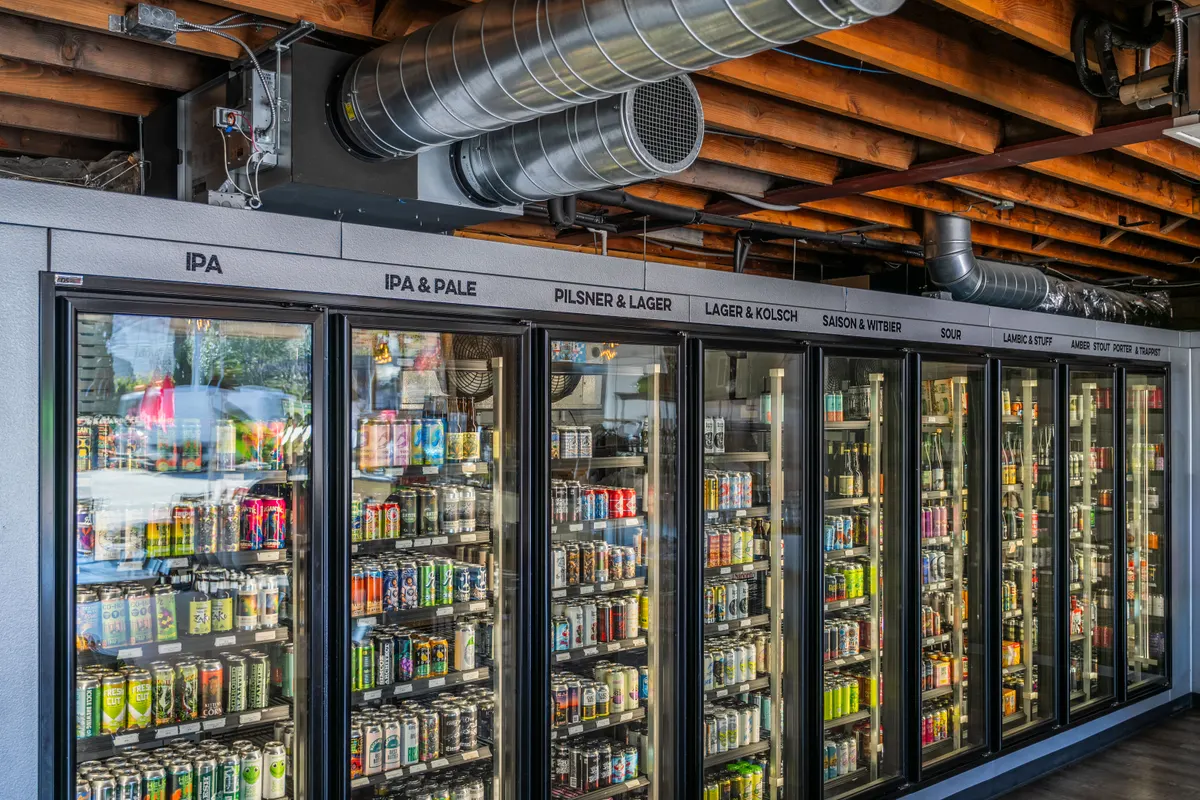
We are at 2446 NW Market St in Ballard, next to the Nordic Museum. We pour fourteen rotating taps in 5, 8 and 16 ounce sizes, so you can put an ale and a lager side by side without committing to two pints, and the current list is always on our Untappd page. There is a fourteen-door fridge of cans and bottles to take home at store prices, or drink any can here for $2 corkage.
Eat something with it: pizza on organic Washington flour dough, made fresh here. Families are welcome, dogs are welcome inside and on the patio, and the patio is where you want to be on a dry day.
What is on tap · Types of beer: the full guide · See the menu


