Beer has four ingredients. That is it. Water, malted grain, hops and yeast. A German purity law from 1516 famously allowed only water, barley and hops, and the yeast was left out because nobody yet knew it existed.
Four ingredients sounds simple. But the same four can make a pale, crisp pilsner, a black stout that tastes of espresso, and a hazy IPA that smells like a bowl of mango. Here is what each one does, and why the Pacific Northwest is such a good place to drink beer.
Beer is around 90 to 95% water, so it matters more than people think.
Minerals in water shape how a beer tastes. Hard water, high in sulfate, makes hop bitterness taste sharper and drier. That is why the pale ales of Burton-on-Trent in England became famous. Soft water, low in minerals, suits delicate lagers. The original pilsners were brewed with the very soft water of Plzeň in what is now the Czech Republic.
Seattle's water comes from mountain watersheds in the Cascades and is very soft. Brewers here can add exactly the minerals they want for each style, which is a little like starting with a clean canvas.
Malt is grain, usually barley, that has been soaked until it starts to sprout, then dried in a kiln. Sprouting wakes up enzymes inside the grain. In the brewery, those enzymes turn the grain's starch into sugar, and that sugar is what the yeast will later turn into alcohol.
How long and how hot the malt is kilned decides almost everything you see and much of what you taste:
Other grains join in too. Wheat gives softness and haze. Oats give a silky body, which is why they turn up in hazy IPAs and oatmeal stouts. Rye adds a peppery edge.
Washington grows a lot of grain, and some brewers here use barley grown and malted in the Skagit Valley, about an hour north of Ballard. It is the same idea as the organic Washington flour in our pizza dough: grain from close to home tastes like somewhere.
Hops are the flowers of a climbing plant, small green cones full of resin and oils. They do three jobs.
1. Bitterness. Hops boiled for a long time give bitterness, which balances the sweetness of the malt. Without hops, beer would taste like sweet bread water. 2. Aroma and flavor. Hops added late in the boil, or after fermentation in what brewers call dry hopping, keep their oils. That is where citrus, pine, tropical fruit, flowers and herbs come from. 3. Preservation. Hops help keep beer fresh, which is part of why heavily hopped beers traveled well in the age of sail.
The Pacific Northwest is the center of the hop world in the United States. Washington's Yakima Valley grows most of the country's hops, along with farms in Oregon and Idaho. When you drink a West Coast IPA here, the hops may well have grown a few hours east of the brewery.
Once a year we get something special from that. In late summer, Northwest brewers rush hops from the field straight into the kettle, often within a day of picking, to make fresh hop beer. It tastes green and bright in a way dried hops cannot, and it lasts only a few weeks. Ballard has a whole brewery district, with many breweries within walking distance of us, and fresh hop season is when it is at its best. This season we have poured fresh hop beers from Halcyon and Matchless, and our neighbors at Reuben's Brews, a few blocks away, are one of the best places in town to try more.
Yeast is a single-celled fungus. It eats the sugar from the malt and turns it into alcohol and carbon dioxide. It also makes hundreds of flavor compounds along the way, which is why yeast is the ingredient that decides which family a beer belongs to.
If you want to see how much yeast matters, taste a lager and an ale made with similar malt and hops. They will taste like different drinks.
Brewers add plenty more: fruit, coffee, cacao, spices, lactose, honey, oak barrels. These are extras, though, not the foundation. Every one of them sits on top of the same four ingredients.
Some beers swap or add grains for practical reasons. Corn and rice lighten the body of many mass-market lagers. Sorghum and millet are used in gluten-free beers.
The whole process in one paragraph: crushed malt is steeped in hot water to make a sweet liquid called wort. The wort is boiled with hops. It is cooled, yeast is added, and the yeast ferments it into beer over days or weeks. Then the beer is conditioned, carbonated, and packaged or kegged. If you want the step-by-step version, our guide to what beer is and how it is made walks through it.
The best way to understand beer ingredients is to drink them side by side. We pour all fourteen of our rotating taps in 5, 8 and 16 ounce sizes, so you can line up three small pours and taste the difference yourself:
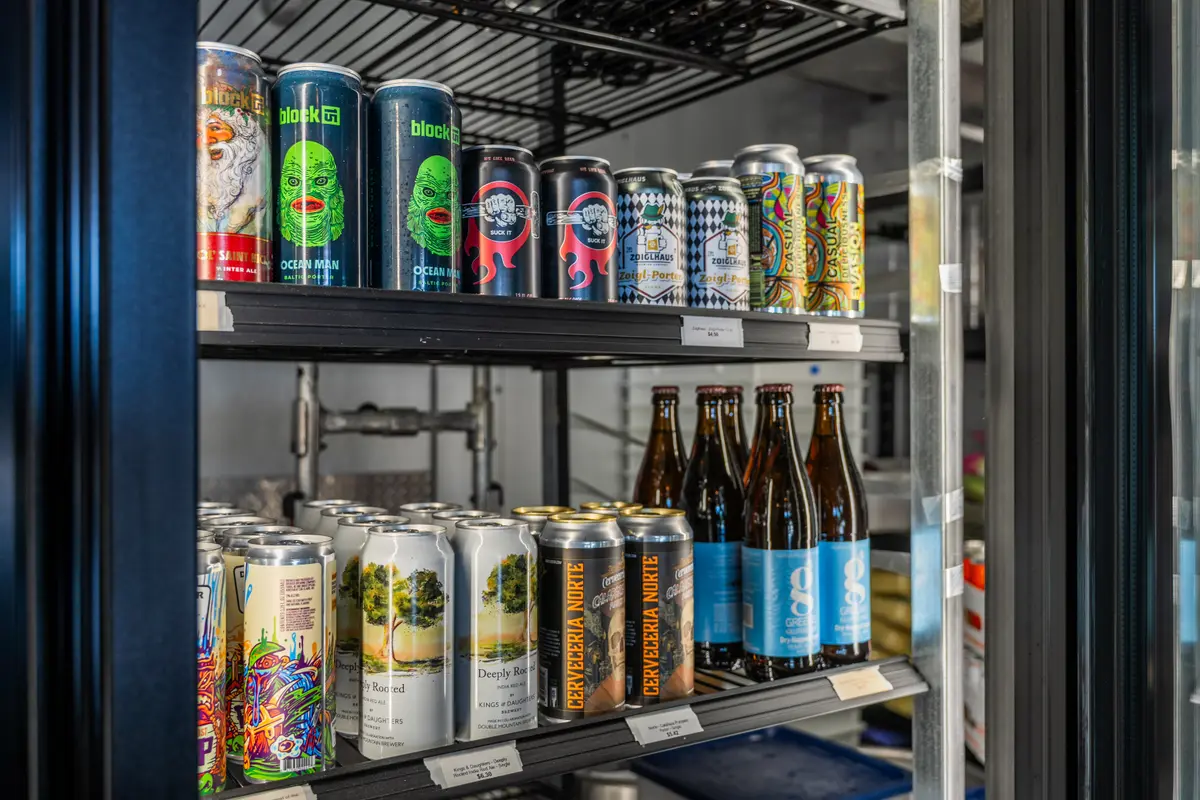
The list changes every week. Today's taps are on our Untappd page. There is also a fourteen-door fridge of cans and bottles, including a proper non-alcoholic shelf. Pick anything from it and we will open it to drink here for $2 corkage a can.
What are the four main ingredients in beer? Water, malted grain (usually barley), hops and yeast. Almost every beer is built on those four.
What ingredient gives beer its alcohol? None of them on its own. Yeast makes the alcohol by eating the sugar that comes from malted grain.
What do hops do in beer? They add bitterness to balance the sweet malt, they add aroma and flavor such as citrus, pine and tropical fruit, and they help keep the beer fresh.
Is there gluten in beer? Most beer contains gluten, because barley and wheat contain it. Gluten-free beers are brewed from grains like sorghum or millet. Some beers are labeled gluten-reduced, which is not the same thing.
Why is most beer made from barley? Barley malts very well, its husk helps filter the wort during brewing, and it has the right enzymes to turn its own starch into sugar.
We are at 2446 NW Market St in Ballard: fourteen rotating taps, natural and organic wine, and pizza on organic Washington flour dough, made fresh here. Families are welcome, dogs are welcome inside and on the patio, and on a dry afternoon the patio is the best place in Ballard to drink a pint.
What is on tap · Types of beer: the full guide · See the menu


