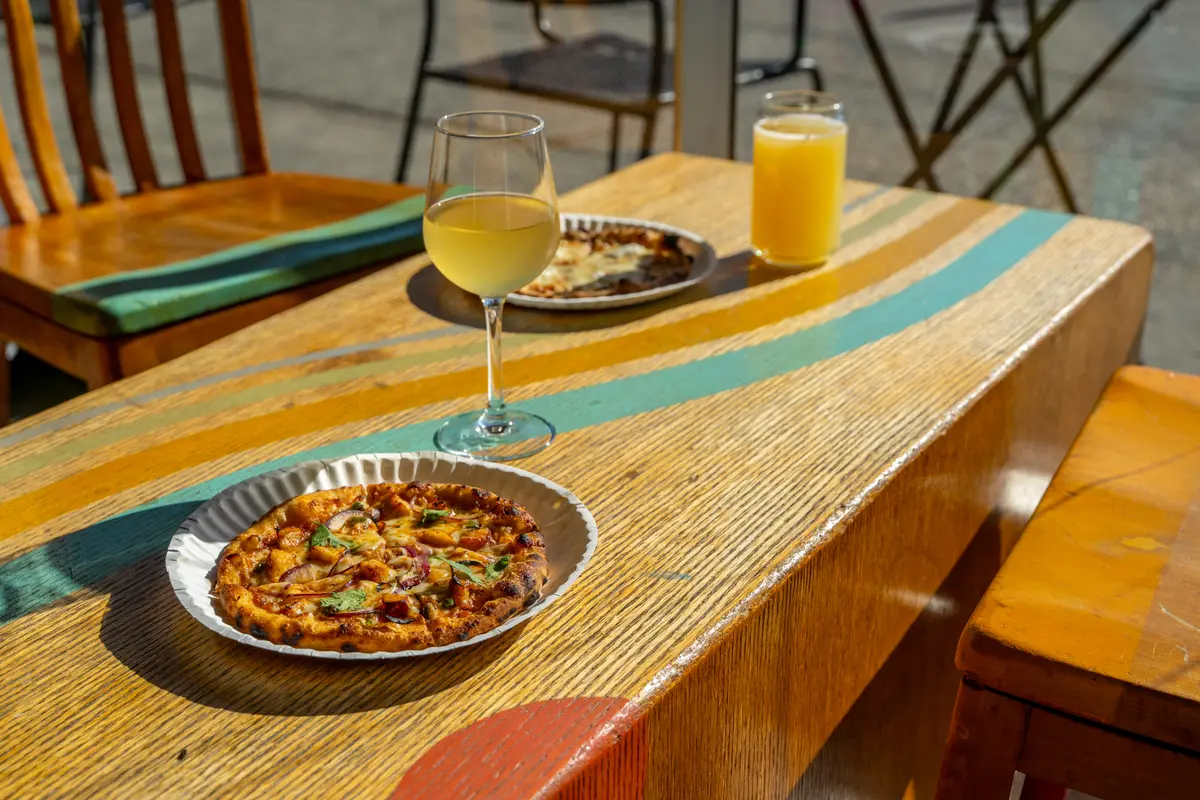
First things first: orange wine has nothing to do with oranges. No fruit goes in it except grapes. The name is about the color, a deep gold to amber to burnt orange, and the color comes from one simple decision in the cellar.
It is one of the wines we get asked about most, and one of our favorites to pour. Here is everything you need to know.
Orange wine is white wine made the way red wine is made.
When most white wine is made, the grapes are pressed straight away and the juice is fermented on its own, without the skins. That is why it is pale and clear.
Red wine is different. The juice ferments with the skins, seeds and sometimes stems for days or weeks. The skins give red wine its color, its tannin and a lot of its flavor.
Orange wine takes white grapes and treats them like red. The juice ferments with the skins in. That contact can last a few days or several months. The longer it goes, the deeper the color and the more grip and texture the wine has.
That is why you will also hear it called skin-contact wine, amber wine or, in Italy, macerated wine. Same idea, different names.
This is the oldest way of making white wine there is. In Georgia, in the Caucasus, people have made wine for thousands of years in large clay vessels called qvevri, buried in the ground. White grapes went in whole, skins and all, and the wine that came out was amber. Georgia's qvevri winemaking is recognized by UNESCO as part of the world's cultural heritage.
The style faded in most of Europe as modern, clean, pale white wine took over. Then in the 1990s, a handful of winemakers on the border between northeast Italy and Slovenia, in Friuli and the Brda hills, went back to the old way with local white grapes like Ribolla Gialla. The term "orange wine" was coined in the early 2000s, and the style spread from there. Today it is made all over the world, often by natural winemakers.
Think of it as a white wine with a red wine's structure.
Short skin contact gives you something fresh and lightly textured, a good first orange wine. Long skin contact gives you something deep, tannic and complex, closer to a red in how it feels. Many orange wines are also natural wines, so some are a little hazy, and a few have a touch of wild funk.
If you have only had one orange wine and did not like it, try another. The range is huge.
Orange wine might be the most food-friendly wine there is. It has the acidity of a white and the texture of a red, so it can handle almost anything.
With our pizza:
Beyond pizza: Indian, Middle Eastern, Georgian and North African food, roast vegetables, mushrooms, hard and funky cheeses, cured meats, and anything with a lot of herbs.
Our pizza is made fresh here on organic Washington flour dough, hand tossed, so the crust is a good match for a wine with this much character.
Most of our wine is natural, organic or both, and there is almost always an orange wine in our fridge. We source the best skin-contact bottles our vendors can find, and the selection keeps changing as we taste new ones. One we have carried recently is the Duo Terra Orange 2023, so ask what is in when you come.
Take a bottle home, or drink it here. Corkage is $5 a bottle, and there is no corkage at all Monday to Thursday until 5pm. Ask us what is open and we will happily pour you a taste first. If you would rather start smaller, our house red, white and rosé by the glass are $12, or $10 at happy hour, Monday to Thursday until 5pm.
Is orange wine made from oranges? No. It is made only from white wine grapes. The name comes from the color, which comes from the grape skins.
Is orange wine sweet? Almost always dry. The fruity aromas can suggest sweetness, but most orange wines have little or no residual sugar.
What is the difference between orange wine and rosé? Rosé is made from red grapes with a short time on the skins, which gives it a pink color. Orange wine is made from white grapes with longer skin contact, which gives it amber color and tannin.
Is orange wine natural wine? Not always, but often. Skin contact is a technique, and any winemaker can use it. Many of the best orange wines come from natural winemakers.
Should orange wine be chilled? Lightly. Around 50 to 55°F is ideal. Colder than that and you lose the flavor and texture that make it special.
We are at 2446 NW Market St in Ballard. Natural and organic wine, pizza on organic Washington flour dough made fresh here, fourteen rotating taps, and a patio made for a cold glass on a sunny afternoon. Families are welcome, and dogs are welcome inside and on the patio.
See the menu · More about the wine · Natural wine vs conventional wine


