Ask ten people what natural wine is and you will get ten answers, a few of them heated. Some people think it is a fad. Some think it is the only honest wine left. Most just know they had a glass somewhere that tasted alive and a little wild, and they want to know why.
We pour a lot of it. Most of the wine on our list is natural, organic, or both. We are not a local-only shop when it comes to wine. We go looking for the best natural and organic bottles our vendors can find, wherever they come from, and we taste a lot before anything goes in the fridge. So we get asked about this every day. Here is how we explain it.
That is the core of it. Everything else is detail.
In the United States, "natural wine" is not a regulated term. Anyone can put it on a label. France created a voluntary certification in 2020 called Vin Méthode Nature, but most producers do not use it, and it does not apply here.
So natural wine is less a rule than a set of shared principles among growers and winemakers. That is why you have to trust who you are buying from. It is also why we taste before we buy, rather than going by the word on the label.
There is nothing wrong with conventional wine. A lot of it is very good, and a lot of the world's most famous bottles are made this way. But it helps to know the tools a winemaker has.
In the vineyard, synthetic herbicides, pesticides and fungicides are allowed, and machine harvesting is common.
In the cellar, a winemaker can choose a commercial yeast strain for a predictable fermentation, adjust acidity, add sugar in cooler regions, add tannin, add oak chips or oak flavor, use fining agents to clarify the wine, filter it tightly, and add sulfites at several stages. Dozens of additives and processing aids are permitted, and almost none of them have to appear on the label.
The aim is consistency. The same wine should taste much the same every year, whatever the weather did.
Natural winemaking starts from the opposite instinct: let the grapes and the place speak, and get out of the way.
In the vineyard, grapes are farmed organically or biodynamically, without synthetic sprays. Most natural growers pick by hand.
In the cellar, fermentation happens with native yeast, the wild yeast already living on the grape skins and in the winery. Nothing is added to change the flavor, the acidity or the color. The wine is usually not fined and not filtered, which is why some natural wines look a little hazy. Many winemakers add a small amount of sulfur at bottling to keep the wine stable. Some add none at all.
The result changes from year to year, the way the weather does. That is the point.
These three words get used as if they mean the same thing. They do not.
Organic is about the farming. The grapes are grown without synthetic pesticides, herbicides or fertilizers. In the US there are two labels to know. "Organic wine" with the USDA seal means organic grapes and no added sulfites. "Made with organic grapes" means the grapes were organic but some sulfites were added in the cellar. Organic says nothing about what else happens in the winery.
Biodynamic is organic farming plus a whole-farm approach developed in the 1920s by Rudolf Steiner. The vineyard is treated as one living system, with compost preparations, cover crops, animals and a planting and picking calendar that follows the moon. Demeter is the best-known certification. Like organic, it is mainly about the vineyard.
Natural is about the whole process, field and cellar. It usually starts with organic or biodynamic grapes, then carries the same hands-off thinking into the winemaking.
So a wine can be organic without being natural. Most natural wine is organic, though plenty of small growers farm that way without paying for certification.
There is no single natural wine flavor, any more than there is one conventional wine flavor. But a few things show up often:
The styles you will meet most often on natural lists include orange wine, white wine made with skin contact, and pét-nat, a lightly sparkling wine bottled before fermentation finishes. Both have their own posts on our blog.
It is different. We love it because the best natural wines taste of a place and a year in a way that is hard to find anywhere else, and because the growers making them tend to farm with real care.
But "natural" on a label does not guarantee a good wine, and a conventional wine is not a bad one. The honest test is the glass in front of you. That is why we taste everything first and only stock what we would happily drink ourselves.
The easiest way in is a glass. Our house red, white and rosé are all natural wines, $12 a glass, or $10 at happy hour, Monday to Thursday until 5pm.
If something in the fridge catches your eye, take the bottle home, or drink it here. Corkage is $5 a bottle, and there is no corkage at all Monday to Thursday until 5pm. Ask us what is open and we will happily pour you a taste first.
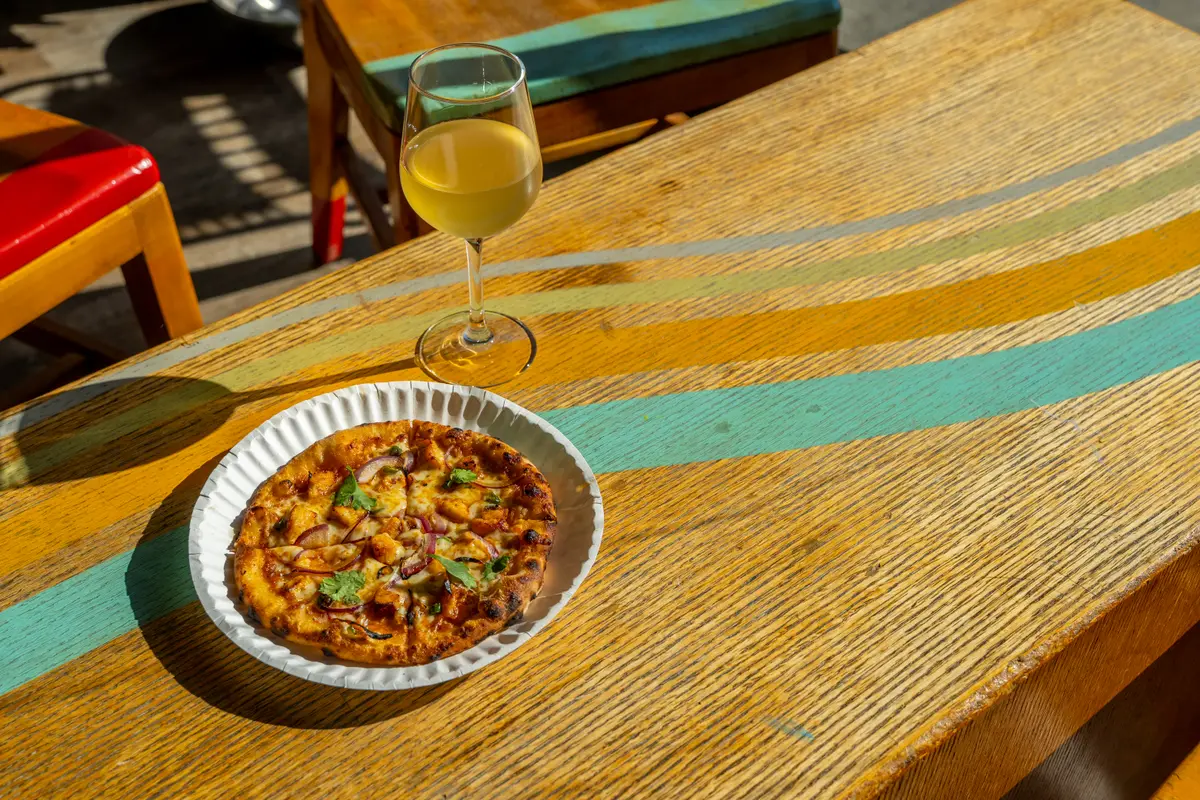
Natural wine and pizza get along very well. The bright acidity cuts through cheese, and the fruit loves tomato. Our pizza is made fresh here on organic Washington flour dough, hand tossed. Take a bottle and a pie out to the patio, bring the kids, bring the dog. Dogs are welcome inside too.
What makes a wine natural? Organically or biodynamically farmed grapes, usually picked by hand, fermented with native yeast, with nothing added or removed in the cellar apart from a little sulfur in some cases. There is no legal definition in the US.
Is natural wine the same as organic wine? No. Organic describes how the grapes are farmed. Natural describes the farming and the winemaking. Most natural wine is organic, but most organic wine is not natural.
Does natural wine have sulfites? All wine contains some sulfites, because yeast makes a small amount during fermentation. Many natural winemakers add a little at bottling, and some add none.
Why is some natural wine cloudy? Because it has not been fined or filtered. The haze is grape and yeast sediment, and it is harmless.
Should natural wine be stored differently? Keep it cool and out of the light like any wine. Wines bottled with little or no added sulfur can be more sensitive to heat, so do not leave them in a hot car.
We are at 2446 NW Market St in Ballard. Most of our wine is natural, organic or both, sourced from the best bottles our vendors can find. Pizza on organic Washington flour dough, fourteen rotating taps, a sunny patio, and families and dogs welcome.


